Installing an HVAC system in Apopka isn’t just about swapping equipment—it’s about getting it right for Florida’s heat, humidity, and local code requirements. Based on what we see homeowners struggle with most, this guide cuts through the confusion by explaining how HVAC installation in Apopka really works, what often goes wrong, and what you should expect from a quality install. If you’re starting from scratch, you’ll gain practical, experience-backed insights to help you make smarter choices that protect your comfort and your home long after installation day.
Quick Answers
HVAC Installation in Apopka
HVAC installation in Apopka requires more than replacing old equipment—it demands proper system sizing, humidity control, and compliance with local permits and Florida building codes. Based on what works best in Central Florida homes, professionally installed HVAC systems that account for airflow and moisture management deliver better comfort, lower energy costs, and fewer long-term issues.
Top Takeaways
Installation quality drives comfort and efficiency.
Florida heat and humidity require climate-specific system design.
Permits and code compliance protect performance and home value.
Ductwork directly affects airflow and energy use.
Informed homeowners make better HVAC decisions.
What Beginners Should Know About HVAC Installation in Apopka
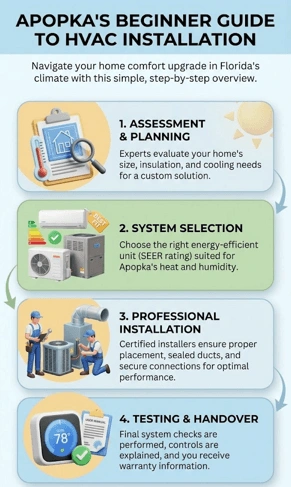
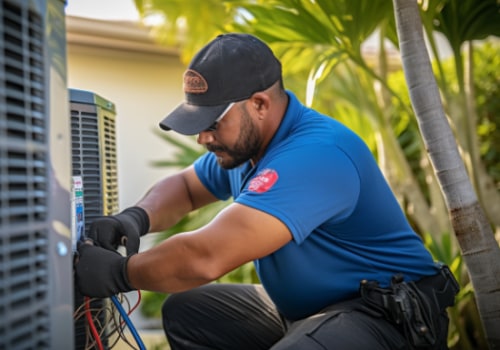
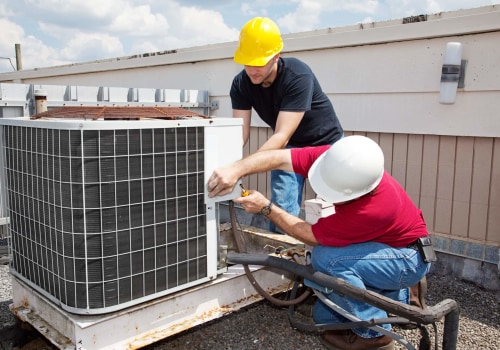
HVAC installation in Apopka is about more than replacing equipment—it’s about designing a system that can handle Florida’s intense heat, constant humidity, and local building requirements. A proper installation starts with evaluating your home’s size, insulation, ductwork, and airflow needs to ensure the system is correctly sized and balanced. From there, professional installers handle everything from safely removing old equipment to setting up electrical, refrigerant, and drainage components that keep moisture under control.
Local permits and code compliance are also a critical part of the process. In Apopka, inspections help ensure your system is installed safely and performs as intended, which can protect your home’s value and prevent future issues. When done right, HVAC installation improves comfort, lowers energy costs, and extends the life of your system—making installation quality just as important as the equipment you choose.
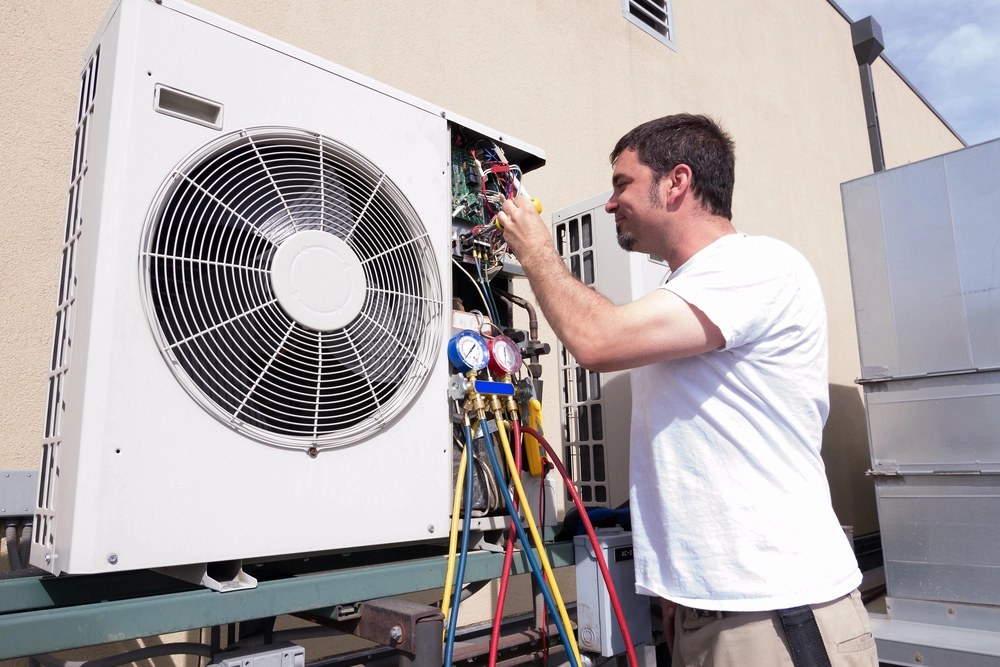
“After seeing countless systems struggle in Central Florida homes, one thing is clear: HVAC installation in Apopka succeeds or fails at the planning stage. When sizing, airflow, and humidity control are done right from the start, homeowners feel the difference every day—and avoid the costly fixes we’re so often called in to correct later.”
Essential Resources on HVAC Installation in Apopka
Getting HVAC installation right in Apopka means understanding the rules, the climate, and what quality workmanship really looks like. These trusted resources help homeowners cut through the noise, avoid costly mistakes, and make confident decisions—before any equipment is installed.
City of Apopka Permitting Portal — Start With the Right Paperwork
This official city resource shows when HVAC permits are required and how to apply, helping protect your home from unapproved work that can lead to fines, failed inspections, or resale issues.
URL: https://www.apopka.gov/253/Permitting
Apopka Building Safety Division — See How Installations Are Evaluated
Learn how Apopka enforces Florida’s building and mechanical codes so you understand what inspectors look for—and why shortcuts can hurt comfort, safety, and system lifespan.
URL: https://www.apopka.gov/222/Building-Safety-Division
Apopka Contractor & Permit Requirements — Make Sure Your Installer Is Legit
This resource outlines contractor registration and permit rules, giving homeowners a simple way to verify they’re working with qualified, compliant HVAC professionals.
URL: https://www.apopka.gov/260/Requirements
Florida HVAC Installation Codes — Understand the Bigger Picture
This statewide overview breaks down HVAC installation codes that impact safety, efficiency, and approval—especially important in Florida’s hot, humid environment.
URL: https://bcapcodes.org/florida/hvac-installation-codes/
Florida HVAC Design & Load Calculation Standards — Learn What “Sized Right” Really Means
Explains Manual J, S, and D standards professionals use to properly size HVAC systems—critical for controlling humidity, reducing energy waste, and preventing premature breakdowns.
URL: https://calcwizards.com/florida-hvac-design-energy-code-compliance/
Florida HVAC Energy Efficiency & SEER Standards — Choose Smarter, Not Bigger
Details Florida’s minimum efficiency requirements so homeowners can choose systems that meet code, lower energy costs, and perform better in extreme heat.
URL: https://aircontrolheatingandcooling.com/florida-hvac-requirements-seer-ratings-energy-efficiency-standards/
Supporting Statistics
1. Air conditioning isn’t optional in Florida homes: According to the U.S. Energy Information Administration, nearly every Florida household depends on air conditioning, and residential cooling accounts for a significant share of the state’s electricity use. In our experience, this explains why installation quality matters so much in Apopka—systems here don’t get a “break season,” so even small setup mistakes show up quickly in comfort issues and higher energy bills.
Source: https://www.eia.gov/state/print.php?sid=FL
2. Humidity control is a core installation issue, not a bonus feature: The U.S. Environmental Protection Agency recommends maintaining indoor humidity between 30% and 50% to reduce mold risk and protect indoor air quality. We consistently see that homes with oversized or poorly installed systems struggle to stay in this range, reinforcing why proper sizing, drainage, and airflow design are critical from day one.
Source: https://www.epa.gov/indoor-air-quality-iaq/care-your-air-guide-indoor-air-quality
3. Ductwork directly impacts comfort and efficiency: ENERGY STAR reports that sealing and insulating ducts can improve heating and cooling efficiency by up to 20% or more. In practice, this confirms what we often encounter—many comfort complaints traced back to installation skipped a duct evaluation, leaving homeowners with efficient equipment that can’t perform as intended.
Source: https://www.energystar.gov/saveathome/heating-cooling
Final Thoughts & Our Take
HVAC installation in Apopka is more than a system upgrade—it’s a long-term investment in comfort, efficiency, and indoor air quality. In Central Florida’s heat and humidity, how a system is installed often matters more than the equipment itself.
From what we see most often, successful installations share a few key traits:
Proper system sizing and airflow design
A clear plan for managing humidity
Permit approval and local code compliance
Ductwork evaluated—not ignored
Where installations tend to go wrong:
Rushed replacements without load calculations
Skipped permits or inspections
Oversized systems that cool quickly but fail to control moisture
Existing duct issues left unaddressed
Our take is simple: HVAC installation in Apopka should be treated as a system design project, not a quick swap. Homeowners who understand the process and work with professionals who respect local conditions typically enjoy:
More consistent comfort
Lower energy bills
Fewer repairs and longer system life
When installation is done right from the start, the payoff isn’t just better performance—it’s dependable comfort and healthier air your home can rely on every day.
Next Steps: How to Move Forward with Confidence
If you’re planning an HVAC installation in Apopka, a few focused steps can make a big difference in comfort and long-term performance.
Start here:
Evaluate your home’s comfort.
Note hot spots, excess humidity, rising energy bills, or frequent system issues.Confirm permit requirements early.
Check Apopka’s local permit and inspection rules before installation begins.Ask for proper system sizing.
Request a Manual J load calculation—never rely on estimates or rule-of-thumb sizing.Don’t overlook ductwork.
Make sure ducts are inspected for airflow, leaks, and compatibility with the new system.Choose efficiency that fits Florida’s climate.
Prioritize systems designed for humidity control and energy efficiency.Work with local, experienced professionals.
Select installers who understand Central Florida homes and follow code-compliant practices.
FAQ on HVAC Installation in Apopka
Q: Are permits required for HVAC installation in Apopka?
A: Yes. Most installations require permits and inspections. Skipping them often leads to failed inspections, safety issues, or problems during resale.
Q: How long does HVAC installation usually take?
A: Most installs take 1–2 days. Delays typically occur when ductwork or electrical issues aren’t addressed upfront.
Q: How do I know if my HVAC system is sized correctly?
A: Proper sizing requires a Manual J load calculation. Oversized systems cool fast but often leave homes humid and uncomfortable.
Q: What HVAC systems work best in Apopka’s climate?
A: Systems designed for humidity control perform best. Variable-speed and multi-stage systems provide steadier comfort in Central Florida.
Q: Does ductwork really matter during installation?
A: Yes. Leaky or undersized ducts reduce efficiency and comfort—even with new, high-efficiency equipment installed.Here is the nearest branch location serving the Dania Beach FL area…
Filterbuy HVAC Solutions - Pompano Beach FL
2521 NE 4th Ave, Pompano Beach, FL 33064
(754) 484-4453