Pull your 10x20x2 filter after a hot Pompano Beach month and the proof sits right there in the gray fuzz: pollen, dust, and pet dander your system trapped before anyone breathed it in. Move up in MERV and that filter grabs even more of the fine stuff. It also asks your air conditioner to work a little harder to move air through the house. Here’s the straight version of how MERV and airflow actually work together inside your filter and how to get cleaner air without choking your system.
TL;DR: Quick Answers
10x20x2 air filter
A 10x20x2 air filter is a 2-inch-thick pleated filter that drops into your HVAC return or air handler to catch dust, pollen, and pet dander before it circulates through your home. The "10x20x2" is the nominal size you order by. The filter itself usually measures about 9.75 by 19.75 by 1.75 inches, so it seats snugly in the slot. That extra inch of depth holds more pleated media than a 1-inch filter, which lets it run a higher MERV without choking your airflow.
• Actual size: about 9.75" x 19.75" x 1.75"
• Fits: central HVAC systems and air handlers with a 2-inch filter slot
• MERV range: 8–13 for most homes, 11–13 for allergies, asthma, or pets
• Replace: every 60 to 90 days, sooner with pets or in humid climates
Top Takeaways
• A higher-MERV 10x20x2 can trim airflow a little, but a quality pleated filter changed on time rarely causes real trouble.
• That 2-inch depth is your friend. More pleated surface area means less resistance than a 1-inch filter at the same MERV.
• MERV 8 to 13 fits most homes. Lean toward 11 to 13 for allergies, asthma, or pets if your system can take it.
• “10x20x2” is the nominal size. The real filter measures about 9.75 by 19.75 by 1.75 inches.
• In humid Pompano Beach, check your filter monthly and watch for weak airflow, long cycles, or a rising bill.
MERV, Airflow, and Your 10x20x2: Getting the Balance Right
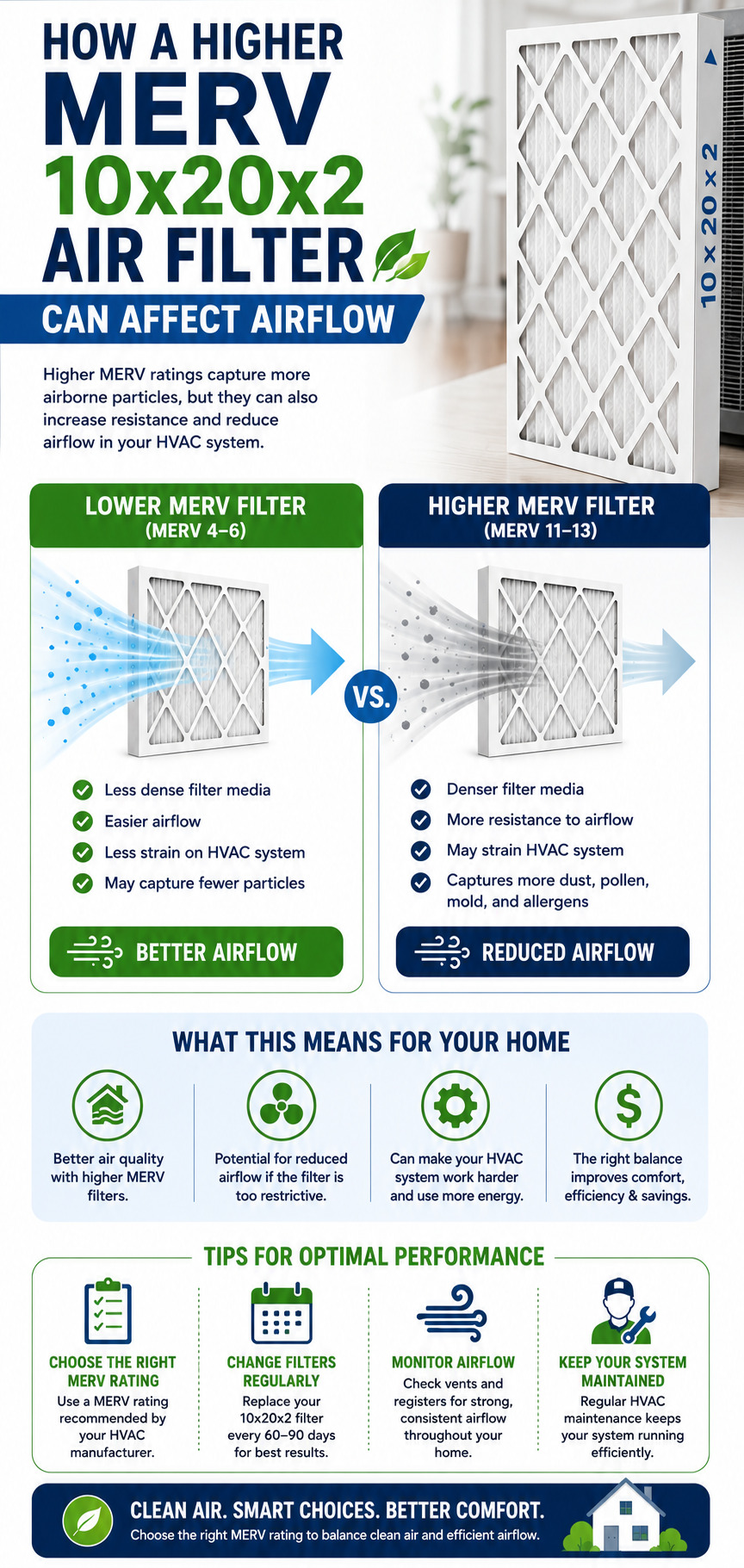
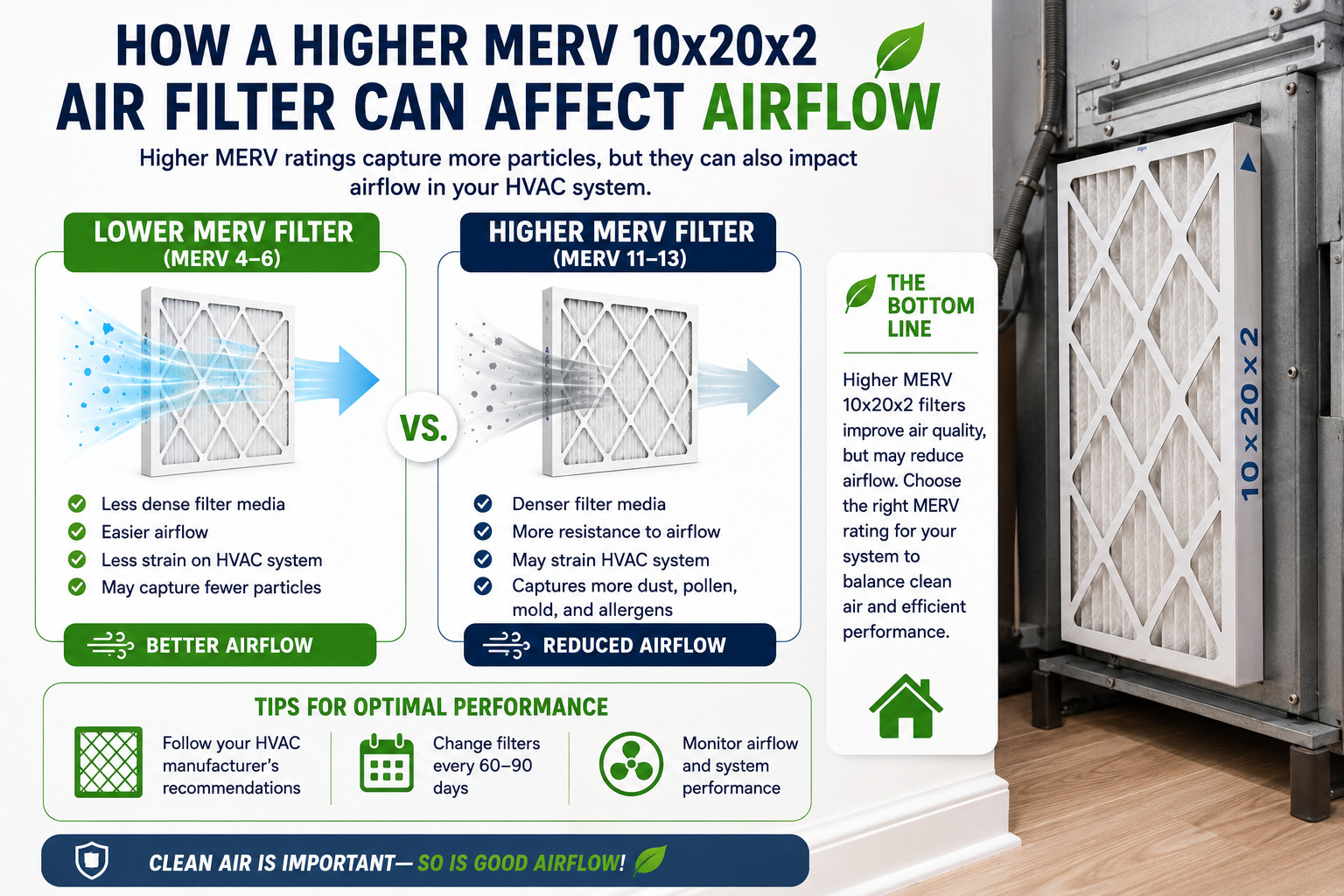
Yes, a higher-MERV 10x20x2 filter can trim your airflow a little. In a healthy, properly sized system, though, a good pleated filter you change on schedule almost never causes trouble. So the smart move isn’t to dodge higher MERV at all costs, but to match the filter to your home and keep up with it.
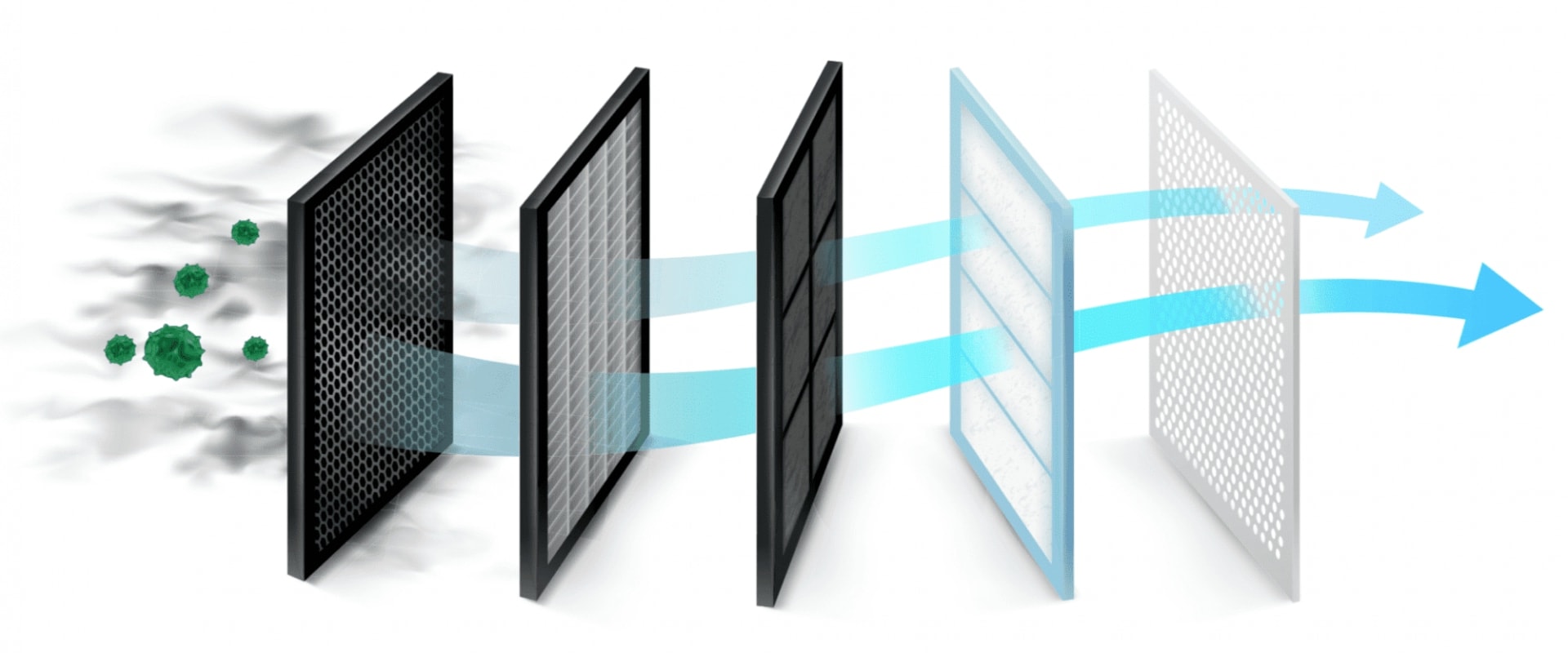
Start with the label. “10x20x2” is the nominal size. The filter itself usually measures about 9.75 by 19.75 by 1.75 inches so it seats snugly in the slot. That second inch of depth earns its place. It packs in more pleated media than a thin 1-inch filter, which is why it can run a higher MERV without straining as much. For the deeper version of how filters actually trap particles, this overview of how air filters work covers it well.
MERV stands for Minimum Efficiency Reporting Value, and it rates how well a filter captures particles, usually on a 1 to 16 scale for homes. The higher the number, the smaller the particles your filter grabs: dust and lint low on the scale, then pollen, pet dander, mold spores, smoke, and bacteria as you go up. There’s a catch. Denser media catches more, and denser media also pushes back against the air trying to pass through.
That push-back is what people mean when they worry about airflow. As air moves through a finer filter, your blower fights more static pressure. Take it too far, or let the filter clog, and you’ll feel it: longer run times, weaker airflow at the vents, a higher power bill, and extra wear on the equipment. Here’s where the 2-inch depth pays off. More surface area spreads the air out, so a 10x20x2 at a given MERV usually breathes easier than a 1-inch filter at the same rating.
For most homes, MERV 8 to 13 hits the sweet spot. Got allergies, asthma, or pets in the mix? Stepping up to MERV 11 to 13 pulls far more of the fine, symptom-triggering particles out of your air. Just make sure your system can handle the higher rating, and keep that filter on a steady replacement schedule. Here in humid South Florida, filters load up faster than they do up north, so a monthly look is worth your time. If airflow is getting choked, your home will tell you: weak air at the vents, cooling cycles that drag on, a power bill creeping up, or a faint whistle near the filter slot.
“After more than a decade of building filters and serving millions of households, we’ll tell you the airflow worry is usually overblown. What actually trips homeowners up is a thin 1-inch filter on a tired blower, left in for six months.”
7 Essential Resources
We’d rather you make an informed call than take our word for it. These independent, authoritative sources are worth a bookmark:
• The EPA’s Plain-English Breakdown of MERV Ratings What each MERV level actually captures, straight from the EPA.
• Air Cleaning for Healthier Lungs (American Lung Association) A lung-health view on HVAC filters and why they often recommend MERV 13 and up.
• California Air Resources Board: Choosing and Maintaining Home Air Cleaners Practical guidance on picking a filter, fitting it right, and keeping it up.
• ASHRAE: Filtration Guidance From the Engineers Behind MERV The technical body that wrote the MERV standard (52.2).
• CDC: How Ventilation and Filtration Cut Indoor Airborne Risk Why airflow and filtration work together for healthier indoor air.
• What Allergists Recommend for Air Filters (ACAAI) Allergy-focused advice on whole-home HVAC filtration.
• EWG Healthy Home Guide: Picking the Right Air Filter Consumer-friendly tips for matching a filter to your home.
3 Statistics Worth Knowing
• Indoor air can run 2 to 5 times more polluted than the air outside, and we spend roughly 90% of our time indoors (EPA). That’s a lot of breaths riding on your filter.
• Swapping a clogged filter for a clean one can lower your AC’s energy use by 5 to 15% (U.S. Department of Energy). Airflow and your power bill are tied together.
• Close to half of your home’s energy goes to heating and cooling (ENERGY STAR). Protect airflow and you protect your wallet, too.
Our Take: You Shouldn’t Have to Choose Between Clean Air and Strong Airflow
Here’s where we’ll plant our flag. The “high MERV wrecks your airflow” warning gets repeated so often that plenty of families settle for a flimsy fiberglass filter and breathe dirtier air than they need to. We think that’s the wrong takeaway. Pick a well-built 2-inch pleated 10x20x2, match the MERV to what your household actually needs, and change it on time. Do that, and the airflow trade-off shrinks to something most homeowners never notice, while the change in what they’re breathing is hard to miss. Better air shouldn’t be complicated, and it shouldn’t cost you your comfort.
Frequently Asked Questions
Does a higher MERV filter reduce airflow?
It can, a little, because denser media adds resistance. In a healthy, properly sized system with a good 2-inch pleated filter you change on schedule, the effect is usually small enough that you won’t notice it.
What MERV rating is best for a 10x20x2 filter?
MERV 8 to 13 works for most homes. Go with MERV 11 to 13 if you’re managing allergies, asthma, or pets, as long as your system can handle the higher rating.
Is a 2-inch filter better than a 1-inch filter for airflow?
Usually, yes. A 2-inch filter has more pleated surface area, so it spreads airflow out and creates less resistance than a 1-inch filter at the same MERV.
How often should I change a 10x20x2 air filter?
Every 60 to 90 days is a solid baseline. In a humid climate, or a home with pets or allergy sufferers, check monthly and replace it sooner when it looks gray or matted.
What is the actual size of a 10x20x2 air filter?
About 9.75 by 19.75 by 1.75 inches. The “10x20x2” on the label is the nominal size you order by.
Can a high-MERV filter damage my HVAC system?
Only if it’s too restrictive for your blower or you leave it in until it clogs. Match the MERV to your system’s capacity and change it on time, and you protect the equipment instead of straining it.
Pick the 10x20x2 That Protects Your Air and Your Airflow
You’re the one looking out for your home’s air, and the right filter makes that easy. Browse American-made 10x20x2 filters in the MERV that fits your household, and give your family cleaner air without giving up airflow. It’s little effort for a big impact. Shop the 10x20x2 air filter collection from Filterbuy and breathe easier today.
Learn more about HVAC Care from one of our HVAC solutions branches…
Filterbuy HVAC Solutions - Miami FL - Air Conditioning Service
1300 S Miami Ave Apt 4806 Miami FL 33130
(305) 306-5027
https://maps.app.goo.gl/Ci1vrL596LhvXKU79